Diesel-powered equipment is a backbone of Australian industry, from mining operations to construction sites, manufacturing facilities to transport hubs. However, the exhaust emissions from these engines contain microscopic particles that pose serious health risks to workers. Understanding and managing exposure to Diesel Particulate Matter is not just a regulatory requirement but a critical responsibility for protecting your workforce.
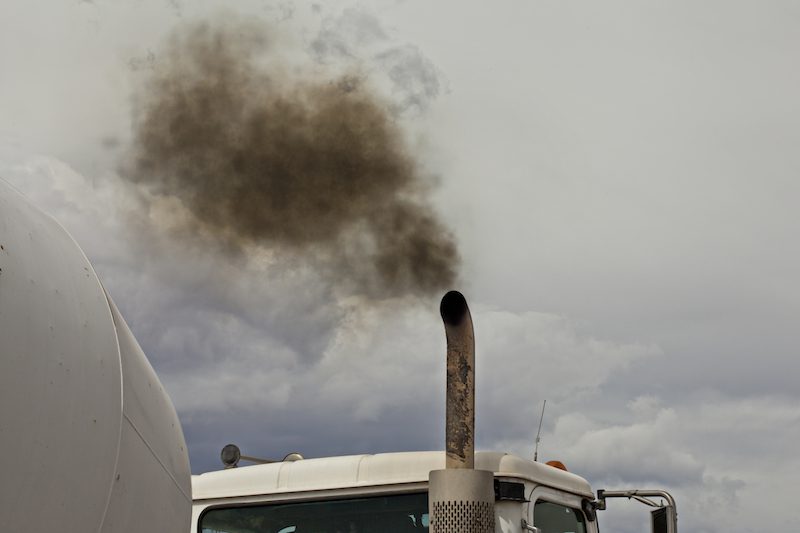
Diesel particulate matter is produced when diesel fuel burns incompletely. It consists of extremely fine particles that remain airborne for long periods and are easily inhaled. These particles are small enough to penetrate deep into the lungs and, in some cases, enter the bloodstream.
Diesel engine exhaust typically contains:
Elemental carbon particles
Organic compounds, including polycyclic aromatic hydrocarbons
Nitrogen oxides and carbon monoxide
Trace metals from fuel and engine wear
Diesel Particulate Matter consists of fine particles smaller than 800 nanometres, composed of a carbonaceous core with various toxic compounds absorbed onto the surface. These submicron particles can penetrate deep into the lungs, triggering immediate irritation and long-term systemic damage.
Research on Western Australian miners found that 29% reported at least one respiratory symptom, with underground workers showing a 64% higher prevalence of cough compared to surface workers. Underground miners were exposed to median elemental carbon levels of 0.069 mg/m³, nearly double the 0.038 mg/m³ experienced by surface workers.
A person conducting a business or undertaking has a legal duty to manage risks associated with airborne contaminants, including diesel particulate matter. This duty applies to both fixed workplaces and temporary or mobile worksites.
DPM exposure risks increase when:
Diesel equipment operates indoors or underground
Multiple diesel engines run simultaneously
Ventilation is limited or poorly designed
Engines idle for extended periods
Equipment is poorly maintained
Without workplace air monitoring, it is difficult to confirm whether existing controls are effective or whether workers are being exposed above acceptable levels.
Audiometrics & Medical Personnel provides diesel particulate matter assessment services tailored to real world conditions. Our occupational hygiene team works across NSW and Victoria, supporting businesses in metropolitan, regional and remote locations.
Our services include:
Personal and area based DPM air monitoring
Use of calibrated, industry recognised sampling equipment
Laboratory analysis through accredited facilities
Interpretation of results against recognised guidelines
Practical advice on exposure control strategies
Support with occupational health monitoring where required
Australia does not currently have a single national workplace exposure standard for diesel particulate matter. Instead, elemental carbon is commonly used as an indicator for DPM exposure, particularly in mining and tunnelling environments.
Regulatory expectations are guided by:
Safe Work Australia hazardous chemicals framework
State based work health and safety regulations in NSW and Victoria
Mining and resources regulator guidance
Many organisations adopt exposure limits around 0.1 mg/m³ of elemental carbon, with some applying more conservative internal criteria.
| Regulation | Jurisdiction | Exposure Limit | Measurement Basis | Effective Date |
|---|---|---|---|---|
| NSW Mines & Petroleum Sites Regulation 2022 | NSW Mining | 0.1 mg/m³ | Submicron elemental carbon (EC), 8-hour TWA | 1 Feb 2021 |
| National Workplace Exposure Limits | All Industries (NSW & Victoria) | 0.01 mg/m³ | Respirable EC, 8-hour TWA | 1 Dec 2026 |
| Safe Work Australia Framework | Victoria & National | 0.01 mg/m³ | Respirable EC, 8-hour TWA | 1 Dec 2026 |
| Workplace or Activity | Common Risk Factors | Likelihood of DPM Monitoring |
|---|---|---|
| Underground mining | Enclosed spaces, continuous diesel plant use | Very high |
| Tunnelling and civil works | Limited ventilation, multiple engines | Very high |
| Warehousing with diesel forklifts | Indoor operation, prolonged idling | High |
| Transport depots | Loading bays, vehicle queues | Moderate to high |
| Manufacturing facilities | Diesel generators or mobile plant | Moderate |
| Waste and recycling sites | Mobile diesel equipment, variable airflow | Moderate |
Mining and resources
Underground and surface mining operations rely heavily on diesel powered mobile plant operating for long shifts. Confined spaces, limited ventilation and multiple machines working simultaneously can lead to rapid DPM build up. Monitoring is often required to verify ventilation effectiveness, manage cumulative exposure and support ongoing health surveillance programs.
Construction and tunnelling
Diesel engines are widely used for excavation, power generation and material handling. Tunnelling, basement works and enclosed construction zones significantly increase exposure risk due to restricted airflow. DPM monitoring helps identify high exposure tasks and ensures controls remain effective as project stages change.
Transport and logistics
Transport hubs and freight facilities experience constant diesel vehicle movement, idling and queuing. Loading docks, covered bays and maintenance areas can trap diesel emissions, exposing workers over repeated shifts. Monitoring supports traffic management decisions and ventilation improvements in high throughput environments.
Warehousing and distribution
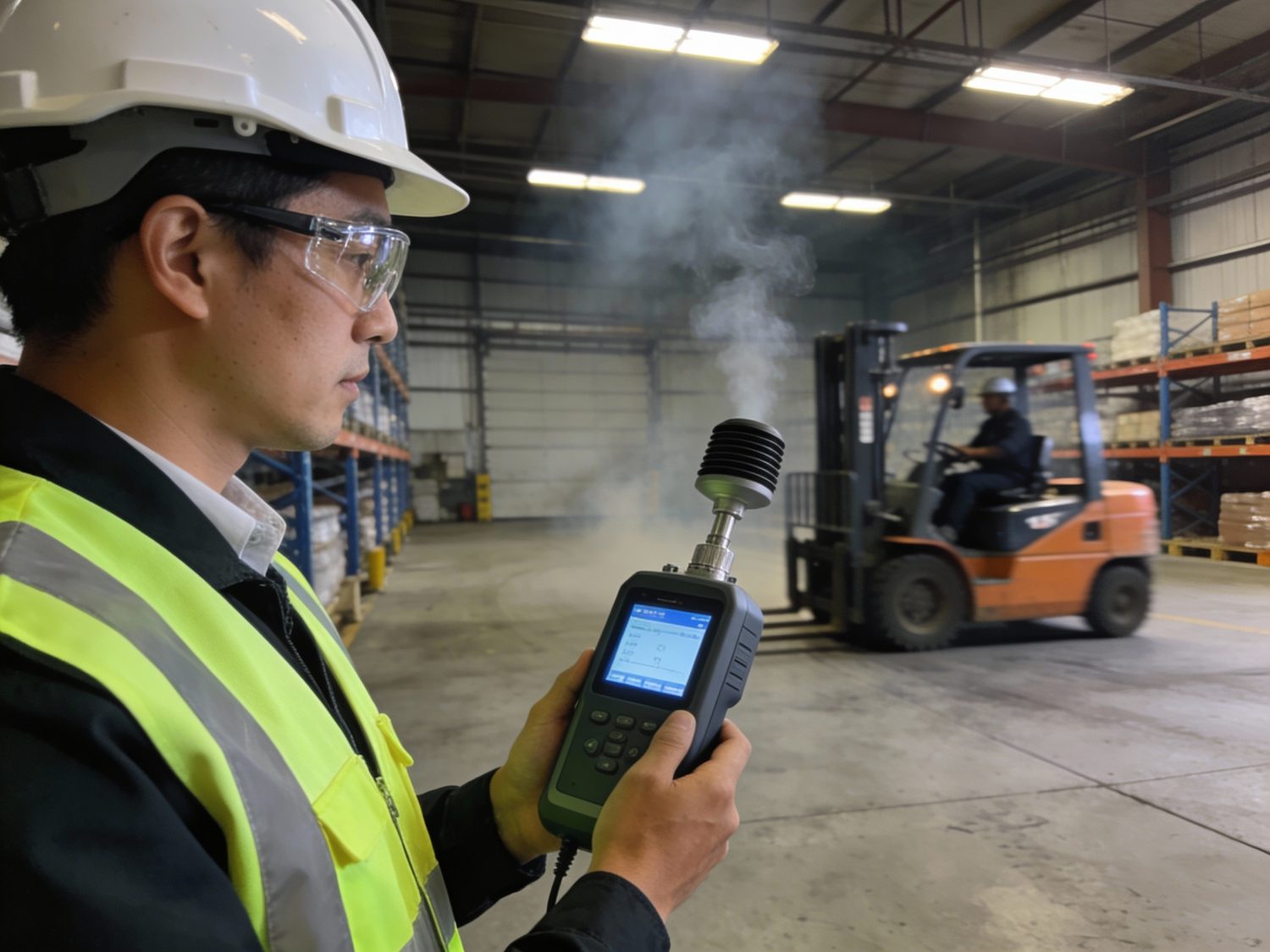
Diesel forklifts and mobile equipment operating indoors or under cover can cause localised DPM accumulation. Short start up cycles combined with long operating hours increase exposure risk. DPM assessment helps determine whether equipment use remains suitable for enclosed warehouse settings.
Manufacturing and heavy industry
Diesel generators, mobile plant and intermittent equipment testing can contribute to background diesel emissions inside production facilities. Exposure is often overlooked where diesel engines are not part of the main process. Monitoring confirms whether diesel exhaust contributes meaningfully to overall workplace air quality risk.
Waste management and recycling
Waste transfer stations and recycling facilities commonly operate diesel loaders and compactors in semi enclosed environments. Continuous vehicle movement and idling can lead to sustained DPM exposure for operators and floor staff. Monitoring supports control strategies and long term health protection for workers.
Ports and intermodal facilities
Ports and intermodal terminals use diesel powered cranes, trucks and transfer equipment across large sites. While often outdoors, localised exposure can occur in covered sheds, cargo holds and transfer points. DPM monitoring helps identify high risk zones and manage exposure for workers stationed near diesel plant.
Early warning signs of diesel particulate matter exposure may include:
Persistent coughing or chest tightness
Shortness of breath during routine tasks
Headaches or eye irritation
Black soot deposits on surfaces or PPE
Increased respiratory complaints from workers
From an operational perspective, triggers for assessment often include changes to plant, increased production demands, worker complaints or regulator enquiries.
DPM monitoring requires a structured occupational hygiene approach.
Our assessment process typically involves:
Reviewing diesel equipment and work tasks
Identifying high risk workers and locations
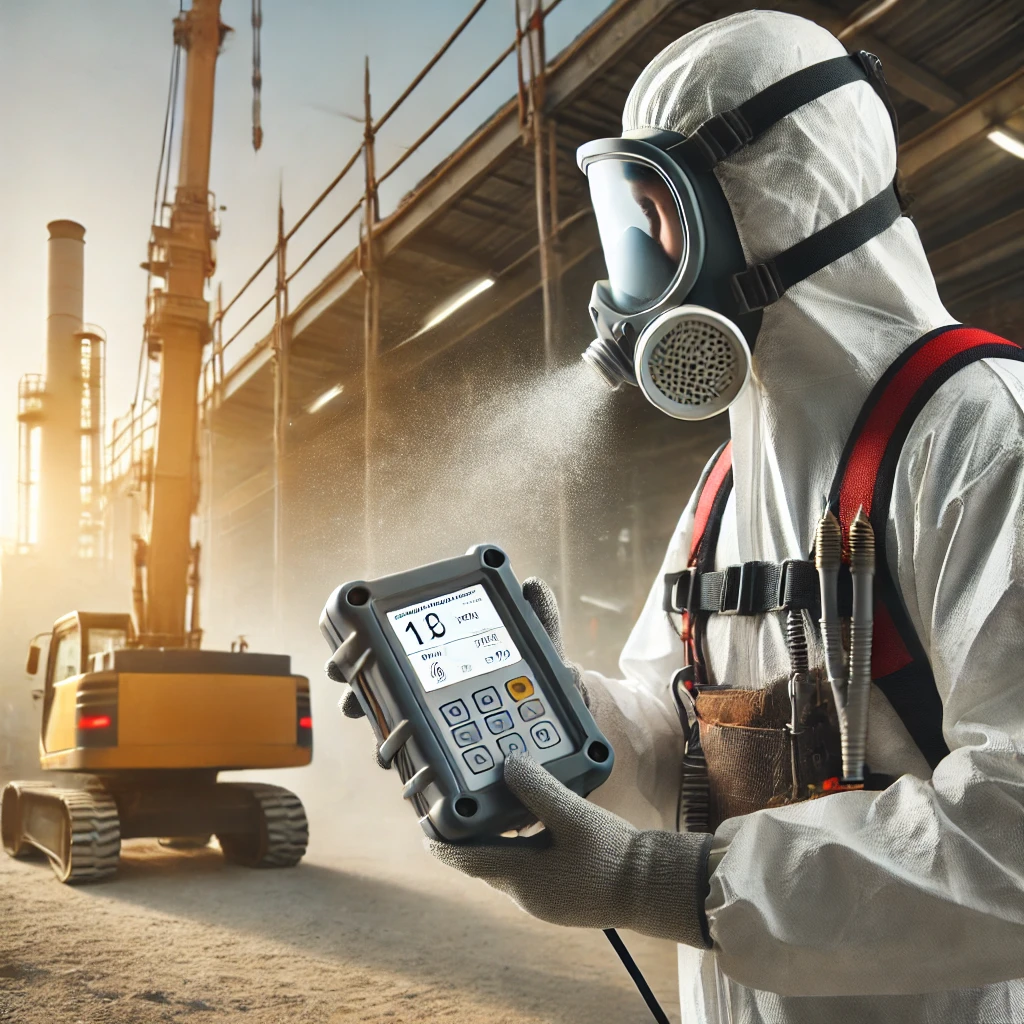
Conducting personal breathing zone sampling
Collecting background area samples
Analysing samples for elemental carbon
Reporting results with clear interpretation and recommendations
Where elevated exposure is identified, follow up monitoring can confirm whether control measures are effective.
Diesel particulate matter measurement employs the NIOSH 5040 analytical method, recognised internationally as the reference standard. This method quantifies elemental carbon in air samples collected on quartz fibre filters. Sampling involves drawing workplace air through specialised filter cassettes at a controlled flow rate, typically 1.7 litres per minute.
Personal sampling, where workers wear sampling equipment throughout their shift, provides the most accurate assessment of individual exposure. Area sampling at fixed locations characterises general air quality and identifies hotspots but may not capture peak exposures experienced by mobile workers. Collected filters are analysed using thermal-optical analysis in NATA-accredited laboratories, with laboratory turnaround time typically ranging from one to two weeks.
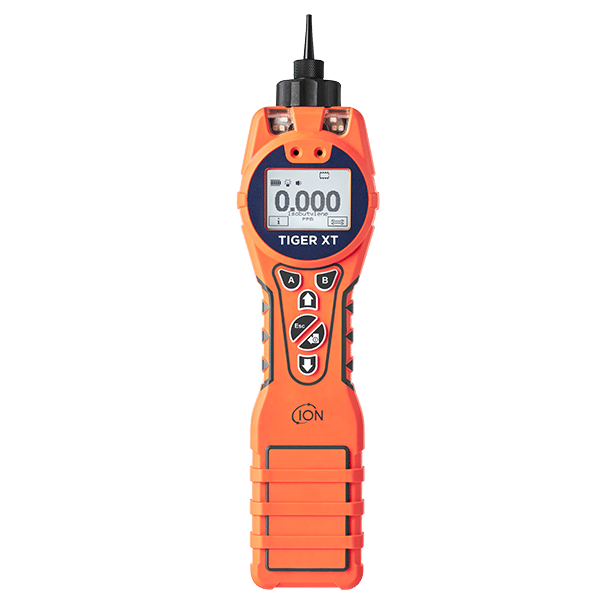
Real-time monitoring instruments provide complementary information, offering immediate feedback on DPM concentrations. These portable devices show good agreement with laboratory analysis and excel at identifying exposure hotspots and evaluating control measure effectiveness.
When monitoring reveals exposures exceeding established limits, immediate action is required. NSW mining regulations mandate notification to the Resources Regulator when workers are exposed to eight-hour time-weighted average concentrations above 0.1 mg/m³. Beyond notification, PCBUs must review and enhance control measures.
The hierarchy of controls provides a systematic framework for response. Engineering controls offer the most reliable long-term solutions. Enhanced ventilation, diesel particulate filters and equipment upgrades to higher-tier engines that meet stricter emissions standards reduce DPM concentrations. Equipment substitution such as transitioning to electric or hybrid vehicles eliminates diesel emissions entirely.
Administrative controls complement engineering measures. Restricting diesel equipment use in poorly ventilated areas, limiting worker time in high-exposure zones and scheduling high-emission activities during lower occupancy periods help manage exposure. Respiratory protective equipment serves as a last line of defence when other controls cannot achieve adequate protection, requiring proper selection, fit testing and training.
From December 2026, respiratory protection factors may be incorporated into compliance demonstrations, providing additional flexibility for managing exposures during the transition to the more stringent 0.01 mg/m³ limit.
Outdoor operations generally achieve adequate dispersion, but monitoring may still be warranted for workers in close proximity to exhaust sources, particularly when equipment operates in semi-enclosed areas such as loading bays, under covered structures or in excavations with limited air exchange.
For expert DPM exposure assessment across NSW and Victoria, contact Audiometrics and Medical Personnel on 03 9819 4355 or [email protected]. Our occupational hygienists provide comprehensive monitoring services with NATA-accredited analysis and practical advice to protect your workforce and ensure regulatory compliance.
Lorem ipsum dolor sit amet, consectetur adipiscing elit. Ut elit tellus, luctus nec ullamcorper mattis, pulvinar dapibus leo.

Audiometrics and Medical Personnel ATF The Trustee for KM Future Trust
03 9819 4355
Business Centre Entrance, C4, Level 1/2 Main St, Point Cook VIC 3030, Australia
30 A Verri Street, Griffith, NSW 2680